
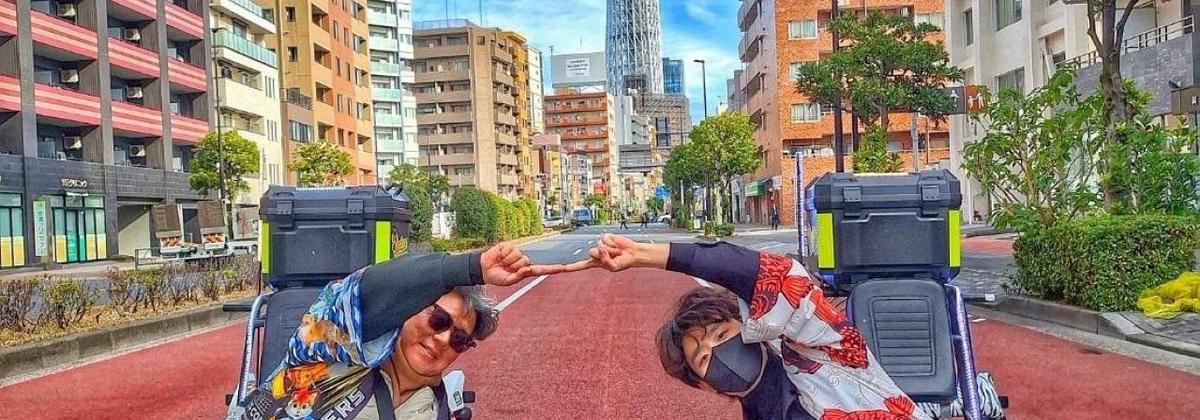
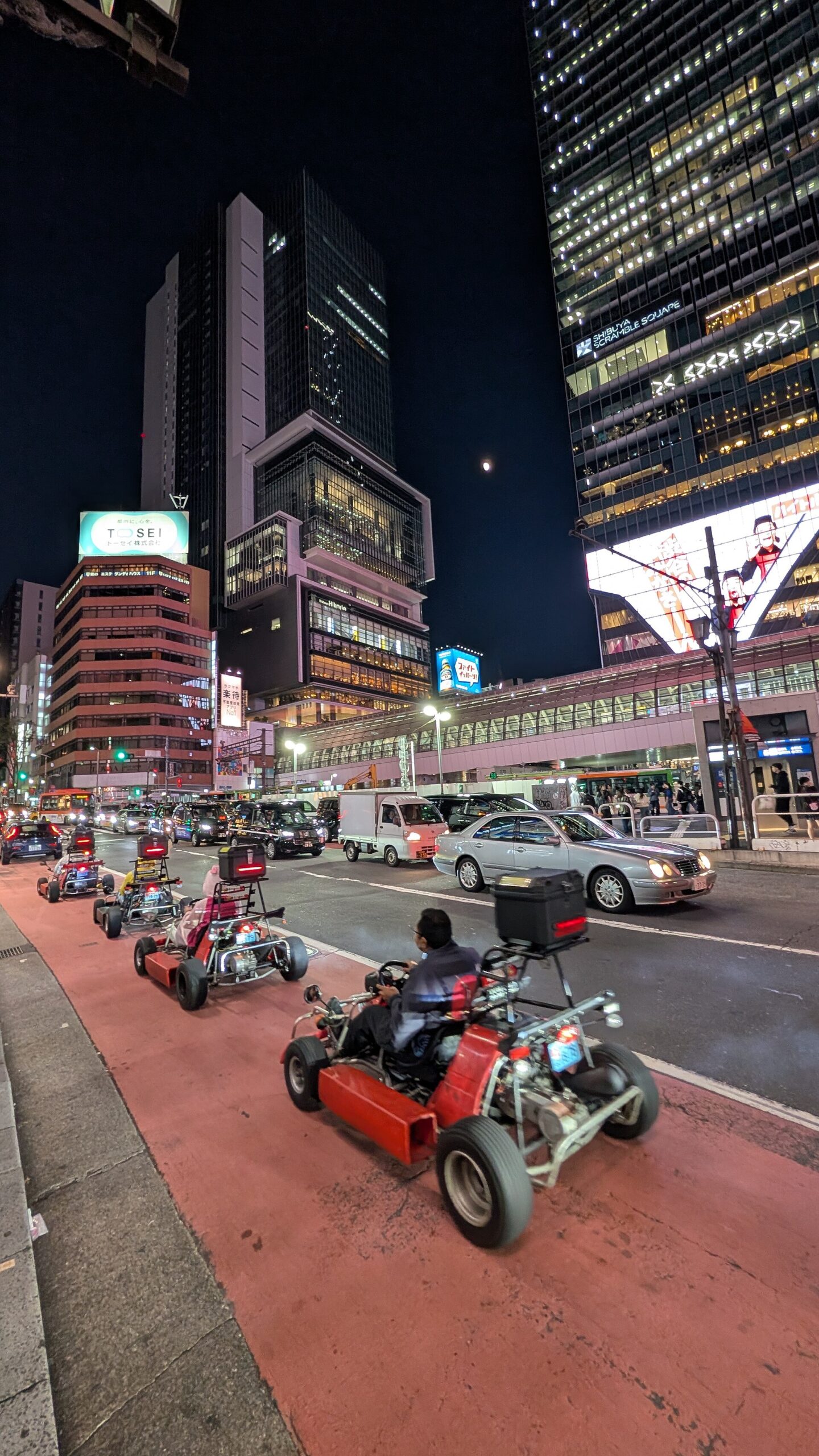
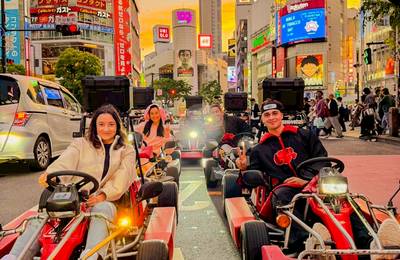
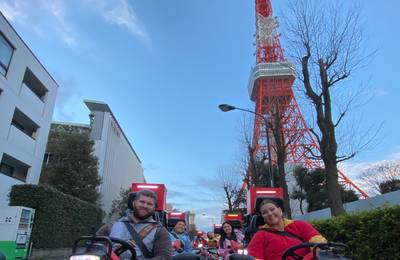
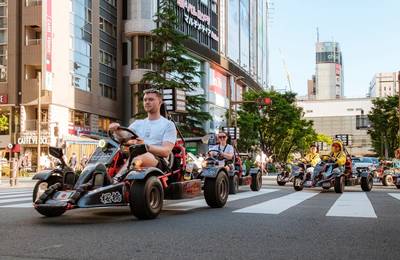
Street go-karting lets visitors drive real karts through public roads in Tokyo and Osaka, passing sights like Tokyo Tower, Ginza, Shibuya, and Akihabara along the way. It suits travelers with a valid driver’s license who want an active, photo-friendly way to see city landmarks rather than a track-only racing session.
Book online
Reserve ahead to secure your slot. Prices are a guide (from, USD); check the current price on Klook.

Affiliate links — we may earn a commission at no extra cost to you.
Good to know
- An International Driving Permit (plus your home license) is required to drive on public roads, so arrange this before your trip.
- Tokyo has the most route variety, with options through Shibuya, Shinjuku, Ginza, Akihabara, and Tokyo Bay, while Osaka offers a single central option.
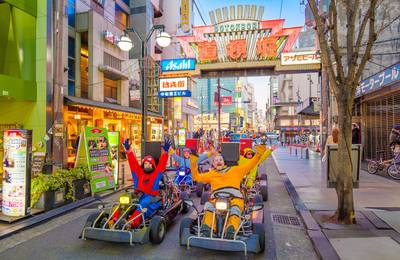
- Costumes (Mario-style or otherwise) are common with these tours, so check whether your provider includes rental gear.
- Routes run on real streets in traffic, so operators typically require a briefing and may set minimum age or height guidelines.
Street karting — driving a small open kart through public roads in a costume — became a fixture of Tokyo tourism over the past decade, and operators now run in several cities. It is genuinely a public-road activity rather than a circuit ride, which means the licensing requirements are real and are the single thing most likely to derail a booking.
You need the right licence
Because these karts are driven on public roads, participants must hold a valid driving licence. For most visitors that means bringing both your home country’s licence and an International Driving Permit issued under the 1949 Geneva Convention, obtained in your own country before you travel — it cannot be issued in Japan. Some countries, including Switzerland, Germany, France, Belgium, Monaco, Slovenia and Taiwan, are not covered by that convention and instead require an official Japanese translation of the licence. Operators check documents at the shop and will refuse participation without them, usually without a refund. Confirm the exact requirement with the operator well before your trip.
Where you can do it
Tokyo has the widest choice, with routes departing from Shibuya, Shinagawa, Akihabara and Asakusa; the Shibuya and Asakusa routes are the ones that pass the landmarks most people picture. Osaka operators run through the Dotonbori and Namba area, Kyoto and Nagoya have smaller operations, and Okinawa offers coastal routes that feel quite different from the city circuits. Tours generally run one to three hours including a briefing, and a guide leads the group. Note that costume offerings have changed following legal action over the use of certain game characters, so what is available now varies by operator.
Rules, safety and practicalities
Karts sit very low in traffic, so tours run in convoy with a lead guide and you are expected to follow the group precisely. Seatbelts are generally not fitted, helmets may or may not be required depending on the kart’s classification, and Japanese road rules apply to you as a driver. Drinking before a tour is not permitted under any circumstances. Rain shortens or cancels tours at most operators. There are usually minimum height requirements, and the karts are single-seat, so children cannot ride along. Check the operator’s current conditions when booking.
Related guides
Last updated: 2026-08-07