


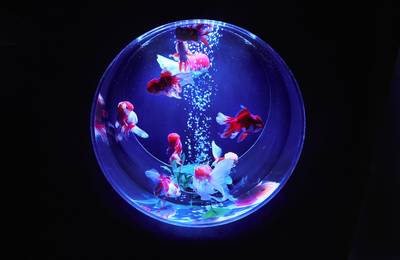
Digital art museums pair immersive, technology-driven installations with striking visuals, ranging from teamLab’s projection-based worlds in Tokyo and Osaka to the illuminated aquarium displays at Art Aquarium Museum GINZA. They suit visitors who want a visually memorable, photogenic outing rather than a conventional gallery visit, and work well for couples, families, and solo travelers alike.
Book online
Reserve ahead to secure your slot. Prices are a guide (from, USD); check the current price on Klook.
Affiliate links — we may earn a commission at no extra cost to you.
Good to know
- teamLab Borderless and teamLab Planets are separate Tokyo venues with different concepts, so check which one matches what you’re after before booking.
- These are immersive, walk-through exhibits, so wear comfortable shoes; teamLab Planets involves wading through water, so check clothing guidance beforehand.
- Tokyo and Osaka each have their own digital art venue, making it easy to add one to your itinerary without extra travel.
- Popular sessions can sell out, especially on weekends, so booking tickets ahead of your visit date is advisable.
Digital art museums are a relatively recent addition to Japan’s attractions, and the format — room-scale projected installations that react to the people walking through them — has become closely associated with the country. The venues change their works periodically, and several have relocated or reopened at new addresses in recent years, so it is worth confirming the current location before travelling to one.
Where to find digital art in Japan
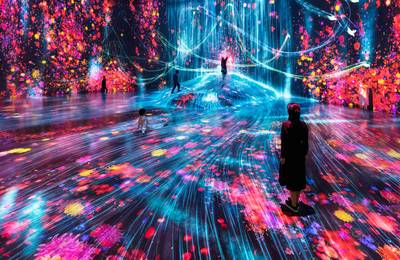
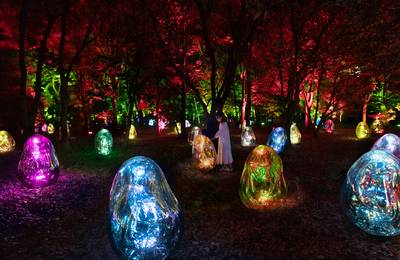
The best-known venues are run by the art collective teamLab. In Tokyo, teamLab Borderless reopened in the Azabudai Hills complex and presents works without fixed room boundaries, so pieces migrate between spaces; teamLab Planets in Toyosu is the barefoot venue, where several rooms involve walking through shin-deep water. In Kansai, teamLab Botanical Garden Osaka takes place outdoors at night inside Nagai Botanical Garden, and there have been seasonal installations at other gardens and castles. Fukuoka has teamLab Forest. Other operators run their own projection venues, and department stores and shopping complexes frequently host temporary exhibitions.
What to expect and what to wear
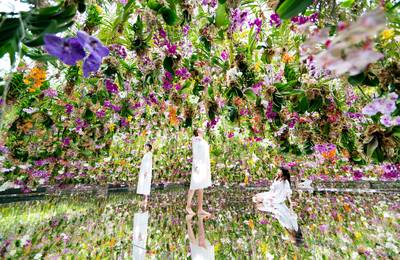
These are not conventional galleries. Floors are often mirrored, which is worth knowing if you are wearing a skirt or dress — venues with mirrored floors usually lend shorts at the entrance. At water-based venues you walk barefoot and roll trousers to the knee, so loose clothing is easier than tight jeans. Lighting is low and surfaces can be reflective and disorienting, which some visitors with motion sensitivity find uncomfortable. Bags are typically stored in lockers rather than carried. Photography is generally allowed and is much of the appeal, though tripods usually are not.
Booking and timing
Entry is by dated and timed ticket at the major venues, and popular slots sell out well ahead during Japanese holidays and cherry blossom season. Tickets are usually non-transferable to another date, so book once your itinerary is firm. Allow two to three hours inside; the layouts are deliberately non-linear and most people spend longer than they expect. Evening slots are quieter than midday at the indoor venues, while the outdoor garden installations only operate after dark and are affected by weather. Check the official site for the current works on display, since installations rotate.
Related guides
Last updated: 2026-08-07