
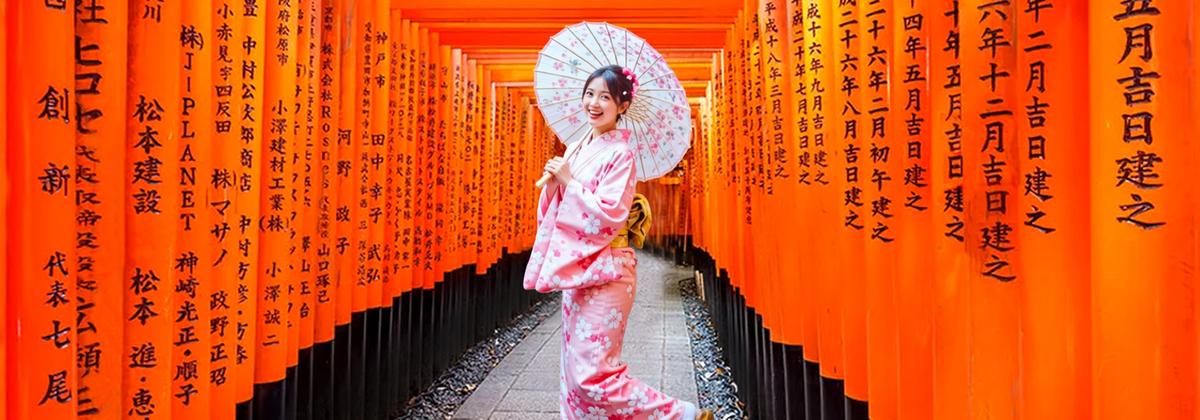
From Kyoto and Osaka, the classic day trips loop the region’s headline sights — Arashiyama’s bamboo grove, the Fushimi Inari torii gates and Nara’s free-roaming deer — often in a single guided outing. They suit travellers who want to cover a lot of Kansai without piecing together buses and trains themselves.
Book a day trip
Guided tours handle the transport for you. Prices are a guide (from, USD); check the current price on Klook.

Affiliate links — we may earn a commission at no extra cost to you.
Good to know
- Nara’s deer park, Fushimi Inari and Arashiyama are frequently combined into one day tour, saving you the transfers.
- Kyoto also works as a base for further-afield trips like Amanohashidate and the Ine boathouses on the Sea of Japan.
- Prefer to travel independently? A JR West Kansai Area Pass covers most of these routes — see our rail passes guide.
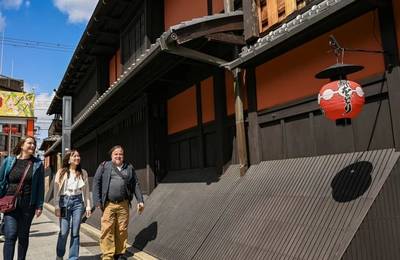
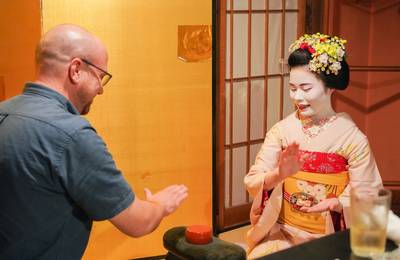
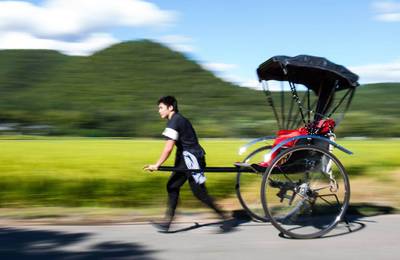
- Rickshaw tours and geisha-district experiences have limited spots, so reserve ahead.
Kansai is compact in a way that Tokyo and its surroundings are not. Kyoto, Osaka, Nara and Kobe sit within roughly an hour of each other by train, which means a day trip here is less about covering distance and more about deciding how many places you can visit before the day stops being enjoyable.
What a Kansai day trip usually covers
The most common guided outing links Arashiyama, Fushimi Inari and Nara Park, sometimes with Kiyomizu-dera or Nijo Castle added. Each of those stops rewards a slow visit, so a tour that includes all of them typically allows an hour or so at each, which is enough to see the headline sight but not to wander. Travellers who already know they want to walk the full Fushimi Inari trail up the mountain, or spend a morning in the bamboo grove before the crowds build, are usually better served by going independently and choosing two stops rather than four.
Kyoto or Osaka as your base
Both work, and the difference is smaller than it appears. Kyoto puts you closest to the temple sights and to Arashiyama, and it suits early starts, since several of the most photographed places are noticeably quieter before mid-morning. Osaka has a wider range of accommodation and a livelier evening, and it is marginally better placed for Nara, Kobe and Himeji. Most day tours in this region offer pickup from both cities, so the choice can be made on where you would rather spend the evening rather than on logistics.
Practical notes
Nara Park, Fushimi Inari and Arashiyama are all outdoors and all busiest in the middle of the day, so an itinerary that reaches at least one of them early tends to feel less crowded overall. The deer in Nara are wild animals rather than a managed attraction, and they are more assertive around the crackers sold on site than visitors sometimes expect. Kyoto in particular gets very hot in midsummer and the walking distances between temple gates are longer than maps suggest, so pacing matters more here than in most Japanese cities. Check current opening arrangements on official sites, as several sites in the region adjust hours seasonally and occasionally close for ceremonies.
Getting to each anchor by train
The three classic stops sit on different lines, which is the detail that decides whether a self-guided day works.
Fushimi Inari is the easiest. Inari Station on the JR Nara Line sits directly beside the shrine, two stops and around five minutes from Kyoto Station. Fushimi-inari Station on the Keihan Main Line is about a five-minute walk east of the precinct.
Arashiyama has three approaches: the JR Sagano Line to Saga-Arashiyama, the Hankyu line to its own Arashiyama station, and the Keifuku Randen tram. The bamboo grove is roughly a ten-minute walk from Saga-Arashiyama.
Nara is reached by the JR Nara Line from Kyoto or by Kintetsu from Osaka, and the park is walkable once you arrive, with buses and taxis serving the temples around its edges.
If you are making several of these trips in one stay, the JR West Kansai Area Pass covers unlimited travel on JR conventional lines across Osaka, Kyoto, Kobe, Nara, Himeji, Wakayama and Otsu, plus the HARUKA airport express. Note what it excludes: other limited express services, the Shinkansen, and paid seating.
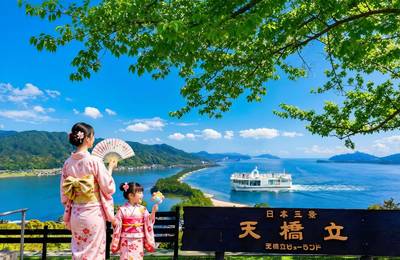
Amanohashidate and the Ine boathouses on the Sea of Japan coast are a different proposition — far enough that a guided tour is the practical choice, and a full day in itself rather than one stop among several.
What is actually at each site
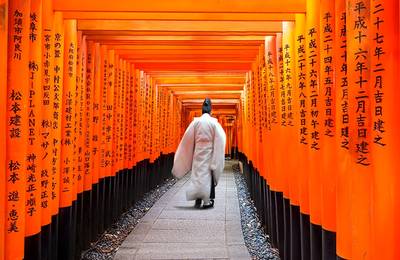
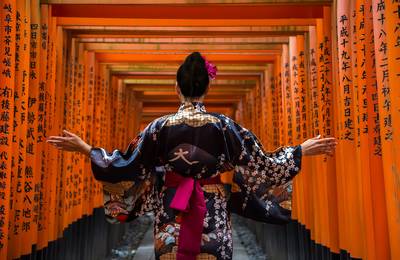
Fushimi Inari is far larger than the photographs suggest. The precinct covers Inariyama, the southernmost of Kyoto’s thirty-six Higashiyama mountains, an area of roughly 870,000 square metres, with around ten thousand torii of varying sizes along the mountain paths. The famous tunnel of gates is only the first section. The full circuit to the summit shrines is optional, and you can turn back at any point without feeling you have missed the place.
The vermilion is not decorative. At Inari shrines red serves as a charm against malign forces, and at Fushimi Inari it also expresses the abundant harvests attributed to Inari Okami.
Nara Park covers 660 hectares, and the deer in it are wild animals rather than a managed attraction. Crackers sold around the park are the main draw for them, and the deer become noticeably assertive once they see one — worth knowing before you buy a packet with children in tow.
The park is not only deer. Todai-ji‘s main hall holds a fifteen-metre bronze Buddha and is the most prominent of Nara’s seven great temples, with two eight-metre guardian figures standing in the Nandaimon gate. At Kasuga Taisha, the bronze lanterns are lit twice a year, in winter and summer.
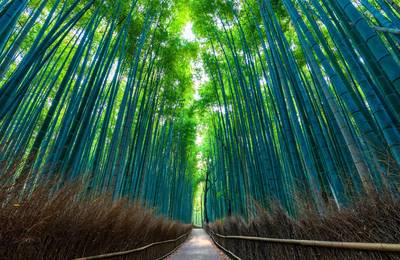
Arashiyama’s grove is short. The path takes only a few minutes to walk, and the approach from the side gate of Tenryu-ji works well. Continuing past the grove brings you to Okochi-Sanso Villa, a quieter garden with a view back over Kyoto that most visitors skip.
Where to eat at each stop
Japanese names are given so you can match the sign on the street.
Near Fushimi Inari. Fushimi Inari DORAIMON (伏見稲荷 土雷門) is an unagi restaurant beside Inari Station, rated 4.9 with over two thousand reviews. GYUKATSU Kyoto Katsugyu Fushimi Inari (牛カツ京都勝牛 伏見稲荷店) serves beef cutlet in Fukakusa and carries more than ten thousand reviews at 4.8.
Around Nara Park. Mizuya Chaya (水谷茶屋) is a teahouse in Kasuganocho, rated 4.7. Gyumabushi Miyama (牛まぶし三山) does set meals and shaved ice, rated 4.9 across more than three thousand reviews. Halal options near the park include Nara Halal Restaurant & RAMEN and GYUMON Nara.
In Arashiyama. Arashiyama Miyoshitei (京都嵐山 和牛 六重亭) is a wagyu restaurant in Arashiyama Square, rated 4.7. Gion Duck Noodles Arashiyama serves duck noodle soup and is rated 4.8; it trades under an English name only, so there is no Japanese sign to look for.
Larger restaurants near all three sites generally take cards, but the teahouses and cracker stalls inside Nara Park lean cash-only, so carry some cash for small purchases.
Access details and site information above follow the shrines’ and tourism boards’ official pages as of August 2026. Restaurant ratings are from Google Maps listings at the same date and change over time.
Related guides
Last updated: 2026-08-07