
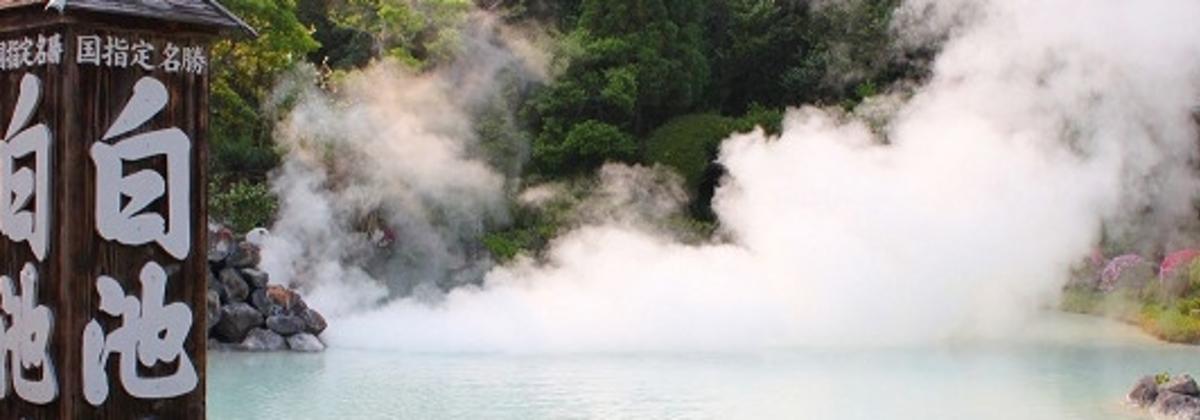
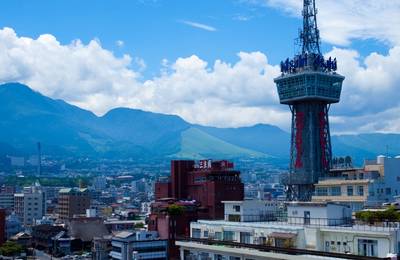
Beppu produces more hot-spring water than anywhere else in Japan and, by most measures, more than almost anywhere in the world. Steam rises out of drains, hillsides and back gardens across the town, which is less a place with hot springs than a place built on top of one. The result is a resort of a particular kind: unpolished, working, occasionally strange, with public bathhouses charging small change alongside sand baths, steam baths and mud baths, and a set of coloured thermal pools too hot to enter that are sold instead as a sightseeing circuit. Yufuin, a more refined hot-spring town, sits half an hour inland, and the two together make the standard eastern Kyushu itinerary.
Beppu and Yufuin are Kyushu’s hot-spring capitals. See Beppu’s steaming, colourful ‘hells’ (jigoku), ride the scenic Yufuin no Mori train, and soak in some of Japan’s most famous onsen.
Some links below are affiliate links — we may earn a small commission at no cost to you. Prices are a guide (from USD); check the latest on Klook.
Beppu’s hells & hot springs
The jigoku, or hells, are seven thermal features spread across two clusters in the Kannawa and Shibaseki districts, presented as a ticketed circuit. They include a cobalt-blue pool, a blood-red iron-rich one, and a geyser that erupts at intervals through the day. None are for bathing — the water is at or near boiling — and the appeal is closer to a geological curiosity than a spa.
The actual bathing happens elsewhere, across eight hot-spring areas with distinct water chemistries. Beppu’s specialities include the sand bath, where you are buried up to the neck in naturally heated black sand on the beach at Shoningahama, and the steam baths at Kannawa, where a herbal floor mat is the only thing between you and the ground heat. Many public baths are cash-only and provide no towels, so bring your own or expect a small rental charge.
Yufuin
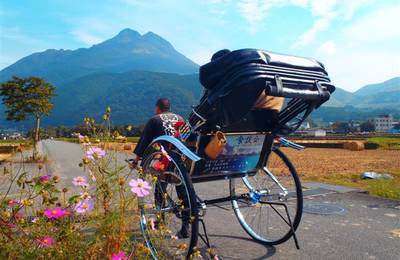
Yufuin lies inland at the foot of the twin-peaked Mt Yufu, and it is the deliberate opposite of Beppu — low-rise, wooden, and organised around a long walking street of galleries, patisseries and craft shops running from the station to Lake Kinrin. The lake is fed by hot springs, which leaves it steaming on cold mornings, and an early start before the tour buses arrive is the way to see it at its best.
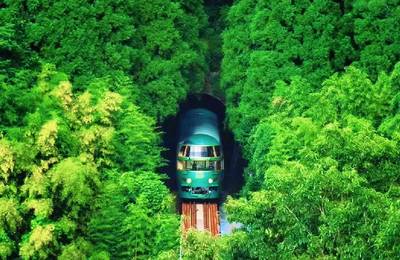
The town’s ryokan are among the more celebrated in Japan and many open their baths to non-staying visitors during set daytime hours. The scenic Yufuin no Mori limited express runs from Hakata and is a small attraction in itself, with reserved seating that books out well ahead. Yufuin can be visited from Beppu in a day, but staying a night is the more rewarding option.
Around Oita
Beyond the two resort towns, Oita Prefecture holds Usa Jingu, the head shrine of several thousand Hachiman shrines nationwide, and the Kunisaki Peninsula, a quiet region of stone Buddhas, cliff carvings and mountain temples that sees relatively few foreign visitors. Takasakiyama, between Beppu and Oita city, is a mountainside home to a large troop of wild macaques habituated to people.
The Kyushu Odan bus crosses west from Beppu through Yufuin to Kurokawa Onsen, Mt Aso and Kumamoto, which makes an efficient island-crossing route without a car. Oita city itself is largely functional rather than scenic, though it has a well-regarded art museum. Bus services in the peninsula are sparse, so a rental car is worth considering for anything beyond the main corridor.

Good to know
Beppu is around two hours from Hakata by limited express and is also served by Oita Airport with a bus connection. The town is spread out and hilly; local buses link the hot-spring districts, and a day pass covering them is usually the sensible purchase. Accommodation ranges from very cheap old guesthouses to high-end ryokan, and the gap between them is wide.
Tattoos remain an issue at some public baths, though private ryokan baths and an increasing number of facilities are relaxed about it — checking ahead avoids an awkward moment at the door. Water temperatures are genuinely high, so ease in. Local food centres on jigoku-mushi, ingredients steamed over a hot spring vent, which several facilities let visitors cook themselves.
- The eight ‘hells’ are for viewing; separate onsen are for bathing.
- The Yufuin no Mori train books up — reserve ahead.
- Beppu and Yufuin combine easily with Fukuoka on a Kyushu loop.
Related guides
The guides below cover the rest of Kyushu, including the cross-island route from Beppu toward Aso and Kumamoto.
Last updated: 2026-08-08