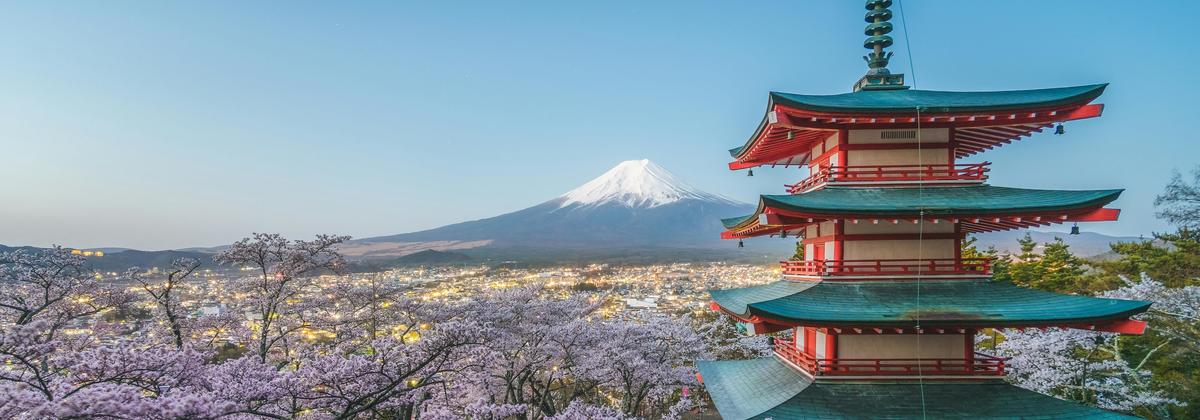
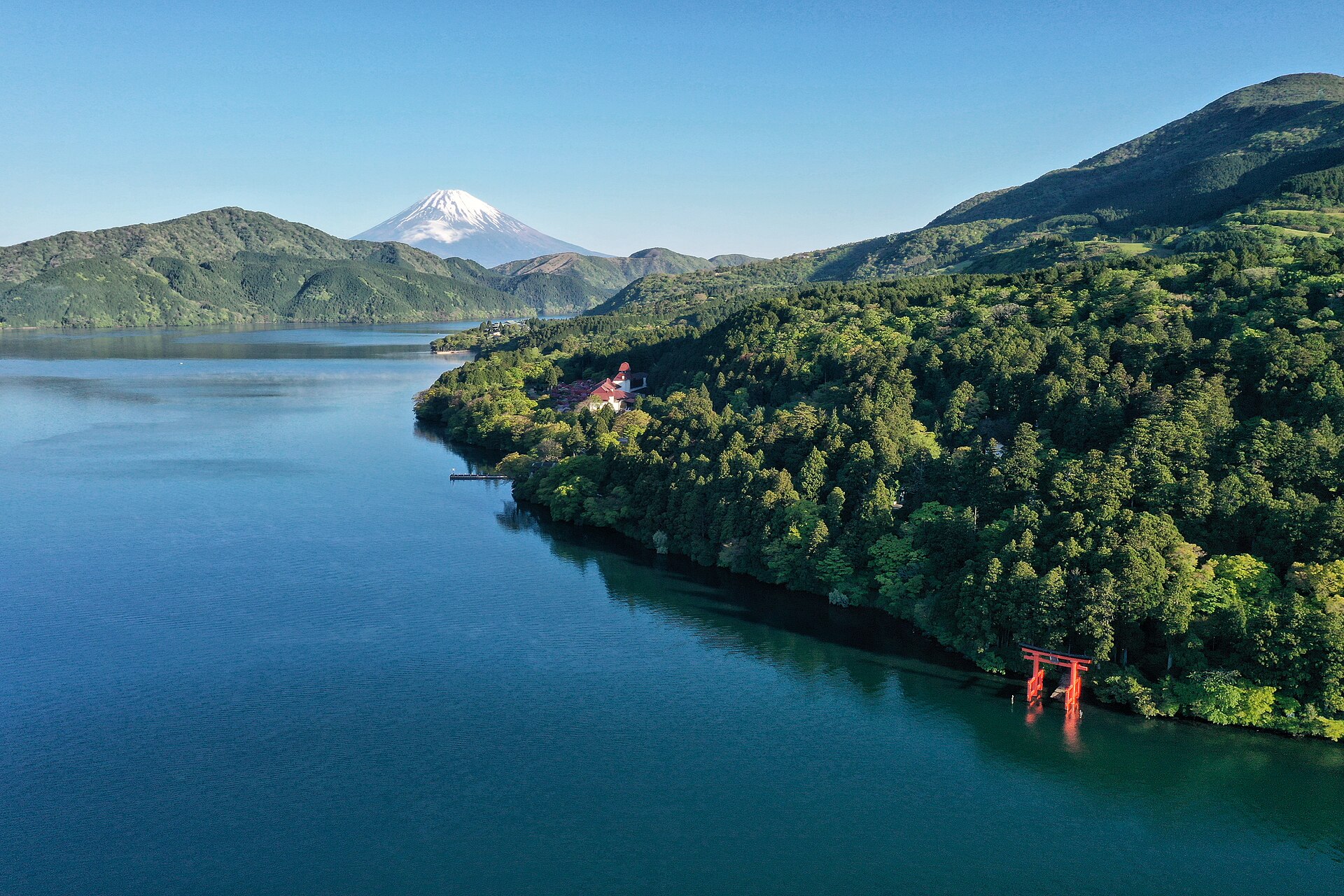
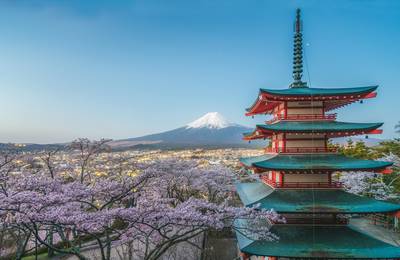
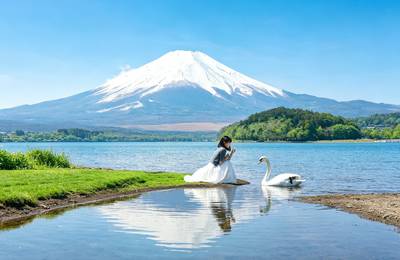
The most popular day trips from Tokyo head to Mt. Fuji and the Fuji Five Lakes and Hakone — you can see the mountain up close, ride ropeways and cruise Lake Ashi, and be back in the city by evening. Most tours pick up in Shinjuku or central Tokyo, which saves you working out the trains yourself.
Book a day trip
Guided tours handle the transport for you. Prices are a guide (from, USD); check the current price on Klook.
![[Hakone & Atami Fireworks Day Trip] Mt. Fuji…](https://res.klook.com/image/upload/c_fill,w_400,h_260,q_70,f_auto/activities/mhdo8wsff9fplo4iqex0.jpg)
Affiliate links — we may earn a commission at no extra cost to you.
Good to know
- Mt. Fuji views depend on the weather, and are often clearest on autumn and winter mornings; guaranteed-departure tours run rain or shine.
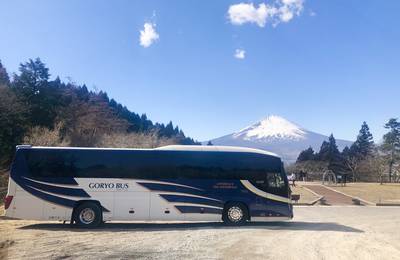
- A guided bus tour is the easiest way to combine several Fuji and Hakone spots in one day without renting a car.
- Independent travellers can also use a JR Tokyo Wide Pass for the Fuji area and Hakone — see our rail passes guide.
- Book ahead in cherry-blossom, autumn-leaf and summer climbing seasons, when the popular tours sell out.
Tokyo sits at the centre of one of the densest rail networks anywhere, and that is the practical reason so much of central Honshu works as a day trip. The limiting factor is usually not distance but daylight: a destination roughly two hours away in each direction still leaves most of the day on the ground, while anything beyond that tends to turn into a long travel day with a short visit at the end.
How far you can realistically go
Kamakura is the closest of the classic options, typically around an hour from central Tokyo, which makes it workable even on a half day or when you are jet-lagged. Hakone usually takes around ninety minutes and is built around a loop of trains, a cable car and a lake boat, so the transport is part of the experience rather than something to get through. Nikko is normally about two hours each way, and the shrine complex and waterfalls sit far enough apart that the day fills up quickly. The Fuji Five Lakes area is the furthest of the four in practical terms, often two to two and a half hours by bus, and it is the one most affected by traffic on weekends and holidays. Journey times vary by route and service, so check current timetables before committing to a plan.
Choosing between the main options
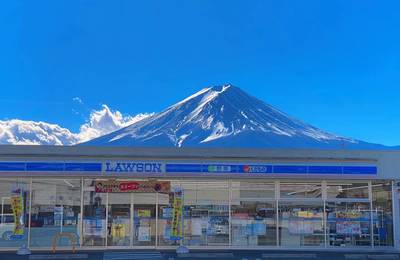
If seeing Mt. Fuji itself is the point of the day, the Fuji Five Lakes and the Fifth Station give the closest views, but they are also the most weather-dependent choice on this list. Hakone offers Fuji views too, usually from further away and less reliably, in exchange for hot springs, an open-air sculpture museum and a volcanic valley. Nikko suits travellers who are more interested in shrines, forest and mountain scenery than in Fuji. Kamakura is the easiest to combine with a relaxed pace, with a large bronze Buddha, temple gardens and a beach within a small area. Travellers with only one free day often find that picking the theme first, rather than the distance, produces a better day.
Guided tour or going independently
Going independently is usually cheaper and lets you set your own pace, and for Kamakura or Hakone the transport is straightforward enough that most visitors manage it without difficulty. Guided day trips make more sense where the connections are awkward or the timings are tight, which in this region mostly means the Fuji area, where a single bus that runs late can absorb a large part of the day. Guaranteed-departure tours also remove the risk of a cancelled small-group outing, which matters when you have one spare day rather than several.
Which pass fits which day trip
The four main day trips sit on four different companies’ networks, so no single ticket covers them all. Settling the pass before booking the tour is usually what decides whether the day feels relaxed or rushed.
Nikko — the Tobu NIKKO PASS. Sold to overseas visitors only, it covers the round trip from Asakusa to Shimo-Imaichi, all Tobu trains within the Nikko area, the local Tobu buses, the Lake Chuzenji sightseeing cruise in season, and one day-use visit to a hotel onsen. Two exclusions catch people out: limited-express surcharges, and shrine admissions — Toshogu is paid separately at the gate (as of August 2026).
Hakone — the Odakyu Hakone Free Pass. Hakone is a loop rather than a single destination: train to Hakone-Yumoto, mountain railway to Gora, cable car and ropeway over Owakudani, then the boat across Lake Ashi. Bought separately that is a handful of tickets; the pass turns it into one, which is the main reason Hakone works inside a day.
Kamakura — usually no pass at all. Ordinary JR fare gets you there, and the Enoden tram between Kamakura, Hase and Enoshima is cheap enough that a pass rarely pays for itself. Some guided Kamakura days include the Enoden ticket, which is worth checking before you buy one separately.
The JR TOKYO Wide Pass is the wildcard. Valid for three consecutive days, it covers JR East lines, the Fujikyu network towards Kawaguchiko, the Tokyo Monorail, and the joint JR–Tobu limited expresses to Nikko and Kinugawa in reserved seats. It does not cover the Tokaido Shinkansen, which belongs to a different company, nor Tobu-only limited expresses. The worked example JR East publishes is a three-day combination — a Joetsu Shinkansen run out to GALA Yuzawa plus a Nikko express trip — and that is the shape of itinerary it is priced for. For one destination on one day it rarely wins; spread across three days it usually does. Our rail pass guide covers how it compares with the nationwide pass.
What no pass pays for
Admissions sit outside all of these tickets, so carry cash for the gates.
At Nikko Toshogu a paid audio guide runs in Japanese, English and Chinese and takes the buildings in order, which is worth having: the carvings are the reason to come, and the sleeping cat on the path to the inner shrine is small enough to walk straight past. A combined ticket adds the Museum of Treasures.
At Kōtoku-in, the Great Buddha has stood in the open since a tsunami destroyed its hall in the fifteenth century; casting of the bronze began in 1252. Stepping inside the statue is a separate small ticket and is sometimes suspended on very hot days. Eating and drinking in the precinct is not allowed beyond a drink from a bottle, and there is no visitor parking — the public lots nearby and a short walk are the way in.
Owakudani and the Mount Fuji Fifth Station have no admission as such. The ropeway and the mountain road are the paid parts, and both are already covered if you are on the Hakone pass or a coach tour.
Eating at each stop
Coach tours stop at set restaurants. Travelling independently, these are within walking distance of the main sight — listed with the Japanese sign to look for, since the frontage is often not in English (as of August 2026).
- Nikko: シャカンカン (Shakankan), a small gyoza and sake counter in the Honcho quarter near the shrine — a lunch stop after the shrine rather than a first stop.
- Kamakura (Hase): MOKICHI Kamakura, sushi and izakaya a few minutes on foot from the Great Buddha, and kaedena., a quieter set-meal place in the same temple area. Both trade under English names, so there is no Japanese sign to hunt for.
- Owakudani: プラザ大涌谷星野 (Plaza Owakudani Hoshino), the cafe at the valley itself, where coaches tend to break for lunch.
- Kawaguchiko: 牛かつ専門店 甲州家 (Koshuya), a beef-cutlet specialist, and 湖波 (Konami), a lakeside restaurant with a direct view of the mountain across the water — worth reserving ahead.
Pass coverage and inclusions above follow the operators’ own English pages as of August 2026. Fares, seasonal cruise dates and admission charges are revised periodically — check each official site before you travel.
Related guides
Last updated: 2026-08-07