
This guide is for travelers seeking traditional crafts and one of Japan’s finest gardens. It answers: “Kanazawa travel guide.”
Quick Facts
- Best for: Garden lovers, craft enthusiasts, food lovers, culture seekers
- Time needed: 1-2 days
- Access: Kanazawa Station (2.5 hours from Tokyo by Hokuriku Shinkansen)
- Area type: Urban with historic districts
- Rain friendly: Partially (museums and covered markets)
Overview
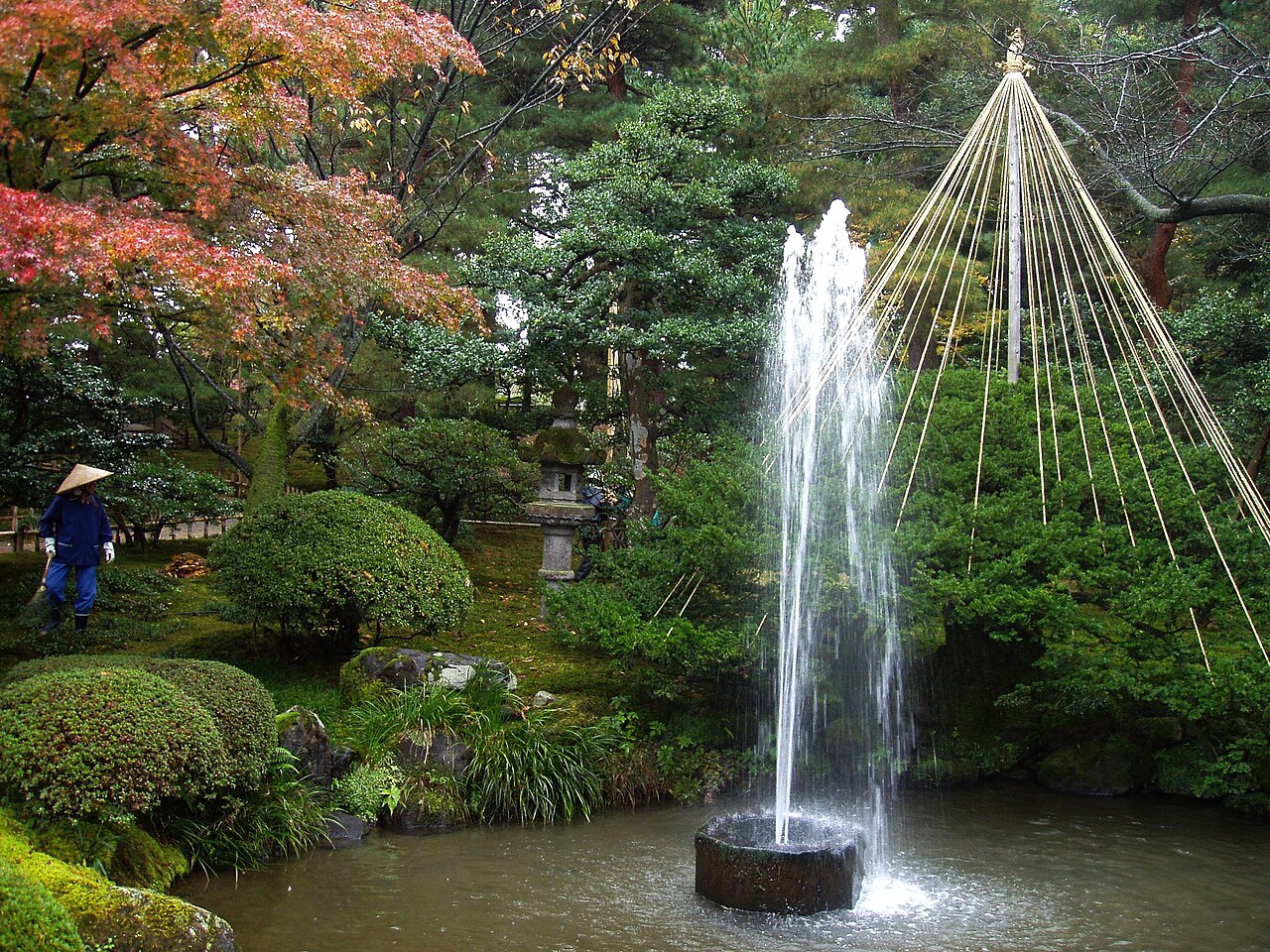
Kanazawa escaped WWII bombing and retains well-preserved samurai and geisha districts. The city is renowned for Kenroku-en, one of Japan’s three great gardens, and for traditional crafts including gold leaf work and Kutani pottery.
How to Enjoy
Kenroku-en Garden
One of Japan’s “Three Great Gardens” with seasonal beauty year-round. Stroll through pine trees, ponds, and the iconic Kotoji lantern.
Historic Districts
Higashi Chaya is a preserved geisha district with teahouses and shops. Nagamachi samurai district features earthen walls and restored residences.
Omicho Market
Fresh seafood market with restaurants serving kaisendon (seafood rice bowls). Known as “Kanazawa’s Kitchen.”
Book tickets, tours & activities
Book popular experiences online. Some are affiliate links — we may earn a small commission at no cost to you. Prices are a guide (from USD); check the latest on Klook.
Tips
- JR Pass: Hokuriku Shinkansen covered by JR Pass.
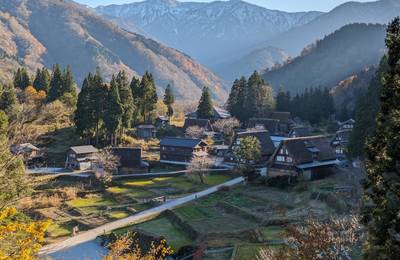
- Combined trip: Easily combined with Takayama or Shirakawa-go.
Explore Kanazawa
Areas & Attractions
Nearby in the mountains: Takayama · Nagano
Getting to Kanazawa
The Hokuriku Shinkansen put Kanazawa within roughly two and a half to three hours of Tokyo, which is the single biggest reason the city appears on more itineraries than it used to. From Kyoto and Osaka the Thunderbird limited express runs along the Sea of Japan coast in around two to two and a half hours. The station itself is worth a moment: the wooden Tsuzumi gate and glass dome are among the more photographed pieces of modern Japanese architecture. Once you arrive the city is compact, and a loop bus circles the main sights; a one-day bus pass usually pays for itself if you plan more than three stops.
Crafts, and what is actually worth buying
Kanazawa produced gold leaf for centuries and still accounts for the overwhelming majority of Japanese production, which is why it turns up on everything from lacquerware to soft-serve ice cream. The more serious crafts are Kutani porcelain, with its heavy overglaze colours, and Kaga yuzen silk dyeing, both of which have workshops open to visitors. Ohi ware, a local low-fired tea ceramic, has been made by the same family line since the seventeenth century. If you want to make something rather than buy it, gold-leaf application workshops are common and take under an hour. Prices for genuine craft pieces are not low, and quality varies widely in the souvenir shops around the teahouse districts.
When to go
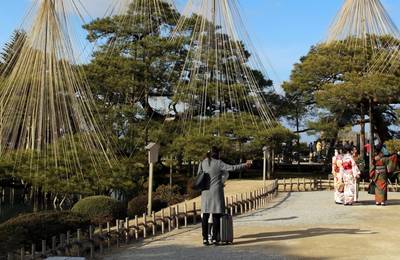
Kanazawa gets more rain than most Japanese cities and locals say you should not forget an umbrella even on a clear morning. Winter brings wet snow, and the rope supports raised over the pines in Kenroku-en to protect them from its weight are a genuine seasonal sight rather than decoration. Spring cherry blossom and autumn colour both suit the garden, and both draw crowds that the city absorbs better than Kyoto does. Summer is humid but far less oppressive than the inland basins. Seafood is at its best in the colder months, particularly snow crab, which has a defined season and is priced accordingly.
Sources
- Tourism board: Visit Kanazawa
Last updated: 2026-02-03