
Overview
Ramen ranked #2 in the 2025 Japan Tourism Agency survey of what foreign visitors enjoyed most. Every region of Japan has developed its own distinctive style—from Hokkaido’s rich miso to Kyushu’s creamy tonkotsu. This guide helps you plan your noodle pilgrimage by region.
Food tours & cooking classes to book
Reserve ahead. Prices are a guide (from, USD); check the current price on Klook.
![[Tokyo Station] Shinkansen Ekiben Bento Box](https://res.klook.com/image/upload/c_fill,w_400,h_260,q_70,f_auto/activities/f4zs7vhbuf1d3loumkwq.jpg)
Affiliate links — we may earn a commission at no extra cost to you.
The Four Major Ramen Styles
| Style | Broth | Origin | Characteristics |
|---|---|---|---|
| Shoyu | Soy sauce | Tokyo | Clear brown broth, classic flavor |
| Shio | Salt | Hakodate | Light, clear, delicate |
| Miso | Miso paste | Sapporo | Rich, hearty, often with butter/corn |
| Tonkotsu | Pork bone | Fukuoka | Creamy white, intense pork flavor |
Hokkaido
Birthplace of miso ramen — rich, warming bowls for cold winters
🍜 Sapporo Miso Ramen
Born in 1955 at Aji no Sanpei, Sapporo’s signature style features rich miso-based broth with medium-curly noodles. Often topped with butter, corn, bean sprouts, and ground pork. The cold climate demanded something heartier than Tokyo’s shoyu.
Where to try:
- Ramen Alley (Ramen Yokocho) — 17 shops in one narrow lane in Susukino
- Sumire — Legendary shop, thick miso with lard layer
- Shirakaba Sansou — Rich miso with generous butter
🍜 Hakodate Shio Ramen
The opposite of Sapporo’s richness—a delicate, clear salt-based broth with straight noodles. Influenced by Chinese cooking brought by traders. Light and elegant.
Where to try:
- Ajisai — The most famous Hakodate shio shop
- Seiryuken — Classic since 1950
🍜 Asahikawa Shoyu
Double-soup style combining pork/chicken with seafood. A layer of oil keeps the soup hot in winter. Thinner curly noodles.
Where to try:
- Aoba — The originator of Asahikawa style
- Hachiya — Rich double-soup with lard layer
Tohoku
Local variations in the rural north
🍜 Kitakata Ramen (Fukushima)
Japan’s #3 ramen city by shop density. Soy sauce base with niboshi (dried sardine) and pork/chicken, served with thick, flat, curly noodles. Locals eat it for breakfast (“asa-ra” morning ramen culture).
Where to try:
- Bannai Shokudo — Institution since 1958
- Makoto Shokudo — Rich pork-based shoyu
🍜 Yonezawa Ramen (Yamagata)
Ultra-thin, hand-stretched curly noodles in a light soy sauce broth. Simple and delicate—the noodles are the star.
Kanto (Tokyo Area)
Where modern ramen innovation happens
🍜 Tokyo Shoyu Ramen
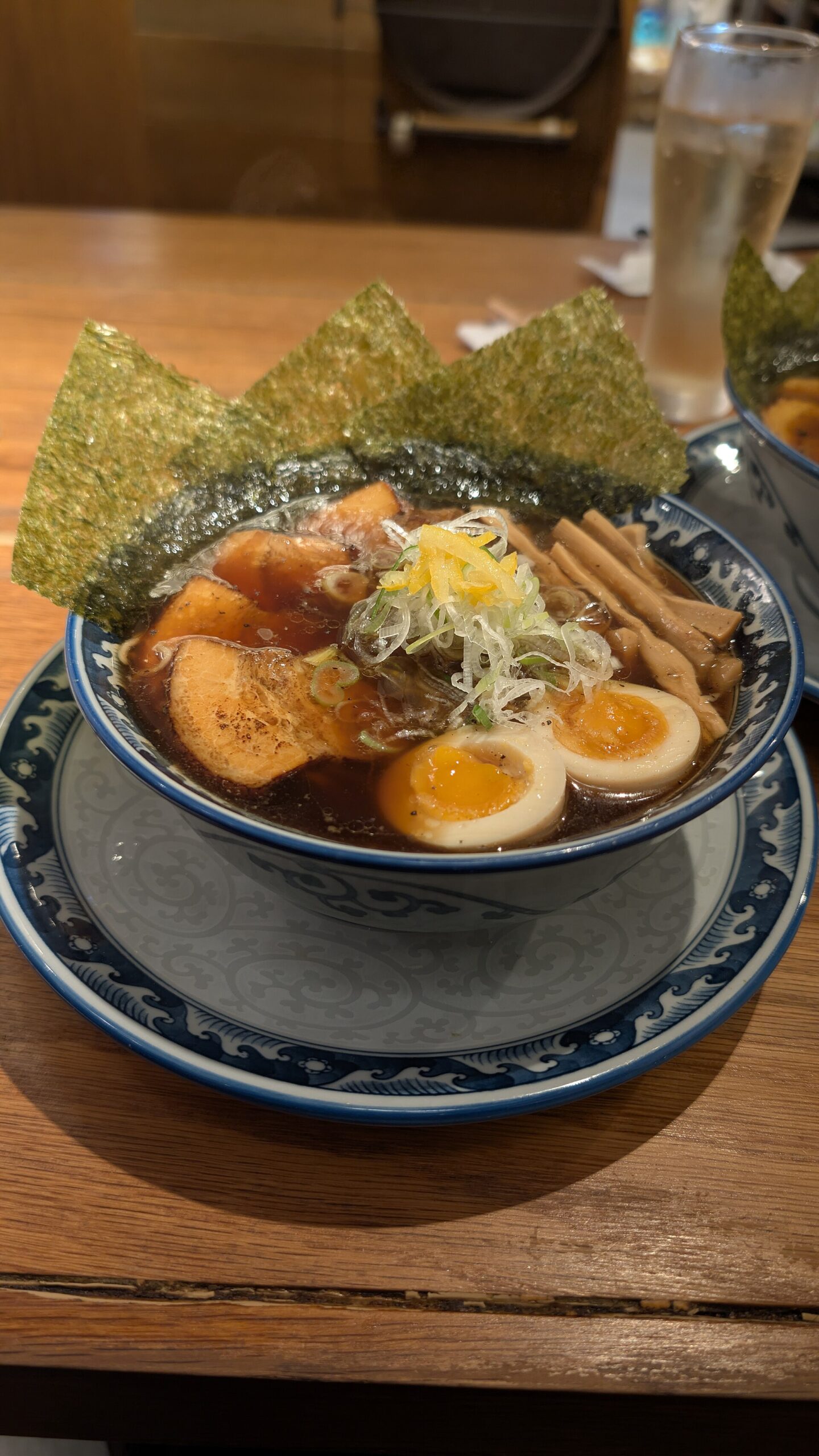
The “classic” ramen known worldwide. Clear soy sauce broth with chicken and dashi, straight or wavy noodles, chashu pork, menma bamboo, green onion, and nori. This is the baseline that all other styles are compared to.
Where to try:
- Fuunji (Shinjuku) — Legendary tsukemen, often has a line
- Afuri (multiple locations) — Light yuzu-shio style
- Rokurinsha (Tokyo Station) — Tsukemen pioneer in Ramen Street
🍜 Tokyo Ramen Street
Eight carefully selected shops in a single corridor beneath Tokyo Station. Perfect for trying multiple styles in one visit: Soranoiro (veggie options), Rokurinsha (tsukemen), Ramen Honda, and more.
🍜 Ie-kei (Yokohama Style)
Born in Yokohama in 1974 at Yoshimuraya. Thick pork-soy broth with thick straight noodles, spinach, and nori. Customizable: you choose noodle firmness, oil level, and broth strength.
Where to try:
- Yoshimuraya (Yokohama) — The original
- Musashiya (Tokyo) — Popular ie-kei chain
🍜 Tsukemen
Not a regional style but a Tokyo innovation—cold noodles dipped in concentrated hot broth. Created at Taishoken in 1961, now found everywhere. Perfect for summer.
Chubu
Central Japan’s unique styles
🍜 Takayama Ramen (Gifu)
Simple, nostalgic style with thin curly noodles in a soy sauce broth. Unique for cooking noodles directly in the soup. Often served in small portions—locals order two bowls.
Where to try:
- Masago Soba — Classic Takayama style since 1938
- Tsuzumi Soba — Near the morning market
🍜 Toyama Black Ramen
Intensely dark soy sauce broth, almost black. Originally made for workers who needed to replace salt lost through sweating. Salty, powerful, unforgettable.
Where to try:
- Nishicho Taiki — The originator
Kansai
Osaka’s street food scene meets ramen
🍜 Kyoto Ramen
Rich, thick shoyu-tonkotsu hybrid. Dirtier and heavier than Tokyo’s refined shoyu. Often topped with nine-strip green onion and back fat.
Where to try:
- Tenkaippin (Tenichi) — Cult-favorite thick “kotteri” broth
- Shinpuku Saikan — Classic Kyoto-style since 1946
🍜 Wakayama Ramen
Also called “chuka soba” locally. Tonkotsu-shoyu blend, often served with “hayazushi” (mackerel sushi) on the side—a unique local custom.
Chugoku & Shikoku
Regional variations in western Japan
🍜 Hiroshima Tsukemen
Spicy cold dipping noodles unique to Hiroshima. Vegetables piled on top of cold noodles, dipped into spicy sesame-soy sauce. Not related to Tokyo tsukemen—completely different dish.
Where to try:
- Bakudan-ya — The originator of Hiroshima tsukemen
🍜 Onomichi Ramen (Hiroshima)
Small-fish dashi with soy sauce and pork back fat floating on top. The fat creates a distinctive taste and sheen. Flat noodles.
🍜 Tokushima Ramen (Shikoku)
Sweet tonkotsu-shoyu with raw egg on top (like a mini rice bowl). Three sub-styles: white, yellow, and brown.
Kyushu
Tonkotsu kingdom — the ramen pilgrimage destination
🍜 Hakata Ramen (Fukuoka)
Japan’s most famous regional style. Ultra-creamy white tonkotsu (pork bone) broth simmered for hours, thin straight noodles ordered by firmness (“barikata” = very firm), and “kaedama” free noodle refills. Minimalist toppings: just green onion, chashu, and pickled ginger.
Where to try:
- Yatai street stalls — Dozens along the Naka River in Tenjin. The authentic experience.
- Ichiran — Individual booths, customizable. International tourists’ first tonkotsu.
- Shin-Shin — Local favorite with richer broth
- Ganso Nagahamaya — 24-hour institution for the after-drinking crowd
🍜 Kurume Ramen (Fukuoka)
The original tonkotsu, created in 1937 (older than Hakata style). Heavier, more intense pork flavor with a stronger smell. For tonkotsu purists.
Where to try:
- Taiho Ramen — Historic shop since 1953
🍜 Kagoshima Ramen
Tonkotsu base but milder than Hakata, often mixed with chicken. Unique local vegetables and pickles as toppings. Less intense for tonkotsu beginners.
🍜 Kumamoto Ramen
Tonkotsu with garlic chips and ma-yu (burnt garlic oil) on top. Richer and more aromatic than Hakata style. Medium-thick noodles.
Ramen Tips
- Slurping is correct — It cools the noodles and shows appreciation
- Eat fast — Noodles get soggy; don’t let your bowl sit
- Customize — Most shops let you choose noodle firmness, broth richness, and oil level
- Kaedama — Extra noodles added to your remaining broth (mainly Kyushu)
- Lines are normal — Popular shops have 30-60 minute waits; worth it
- Ticket machines — Many shops use vending machines; buy your ticket first, then sit